What to do?
Currently, not much is known about the syndrome: why it happens, how to diagnose it, or how to treat it; however, ruling out other contributing factors or getting more data about the current health state, could be very useful.
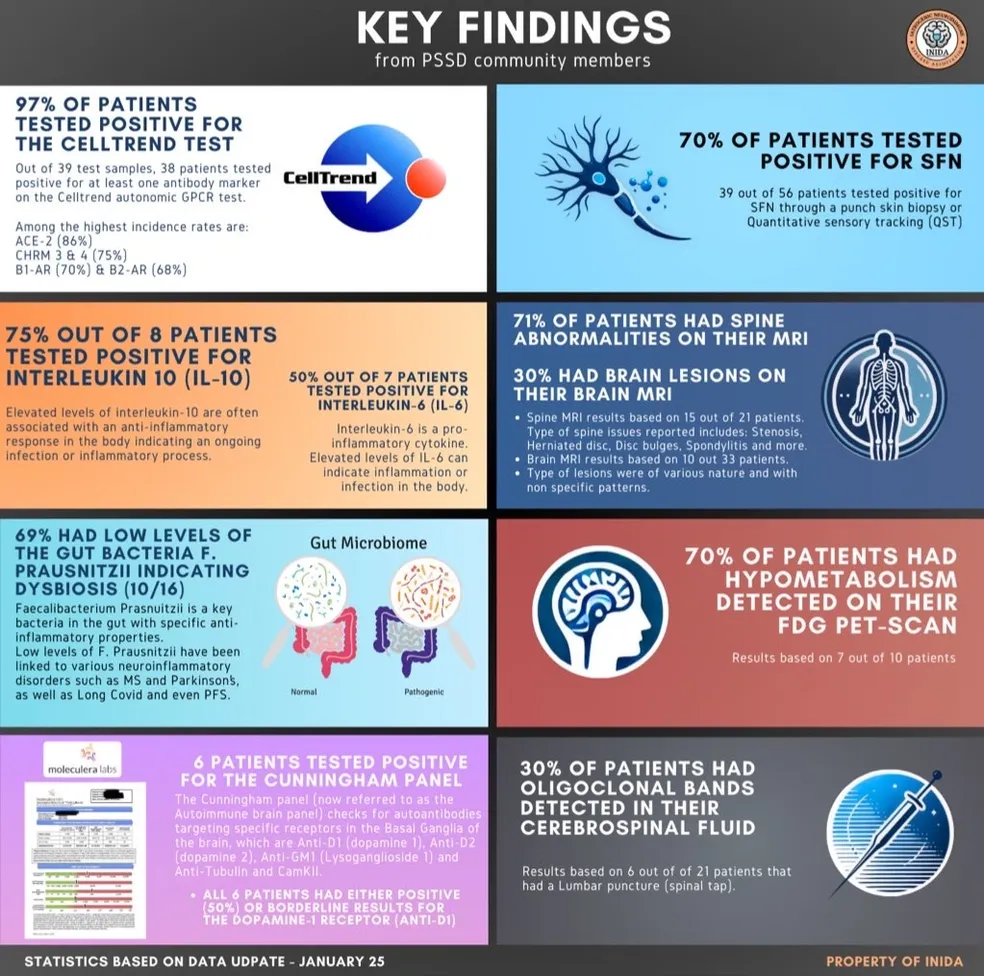
The Iatrogenic Neuroimmune Disease Association (INIDA) is a patient-led organization dedicated to documenting clinical findings and advancing scientific understanding of emerging drug-induced neuroimmune disorders. By gathering real-world clinical data and collaborating with clinicians and laboratories, INIDA has identified an interesting pattern of abnormalities across affected patients. The organization has found:
- 97% of patients tested positive on the CellTrend test, showing at least one autonomic GPCR antibody; the most common were ACE-2 (86%), CHRM3/4 (75%), and β1-AR/β2-AR (70%–68%).
- 70% of patients tested positive for Small Fiber Neuropathy (SFN), confirmed through skin punch biopsy or quantitative sensory testing.
- 75% of patients had elevated Interleukin-10 (IL-10), an anti-inflammatory cytokine often associated with ongoing infection or immune activation.
- 50% of patients had elevated Interleukin-6 (IL-6), a pro-inflammatory cytokine indicating systemic inflammation or immune dysregulation.
- 71% of patients showed spinal abnormalities on MRI, including stenosis, herniated discs, disc bulges, spondylitis, and other structural irregularities.
- 30% of patients had brain lesions on MRI, with lesions varying in pattern and often nonspecific but indicative of neurological involvement.
- 70% of patients displayed cerebral hypometabolism on FDG PET scans, suggesting impaired brain glucose utilization and altered neuronal function.
- 69% of patients had low levels of the gut bacterium Faecalibacterium prausnitzii, a key anti-inflammatory species whose deficiency indicates significant gut dysbiosis.
- Patients tested on the Cunningham Panel showed positivity for neuronal autoantibodies, including Anti-D1, Anti-D2, Anti-Tubulin, Anti-Lysoganglioside, and CaMKII, supporting autoimmune involvement.
- 30% of patients who underwent lumbar puncture had oligoclonal bands in cerebrospinal fluid, indicating immune activation within the central nervous system.
Therefore, if you suffer from Post SSRI Syndrome it makes sense to seek out these tests.
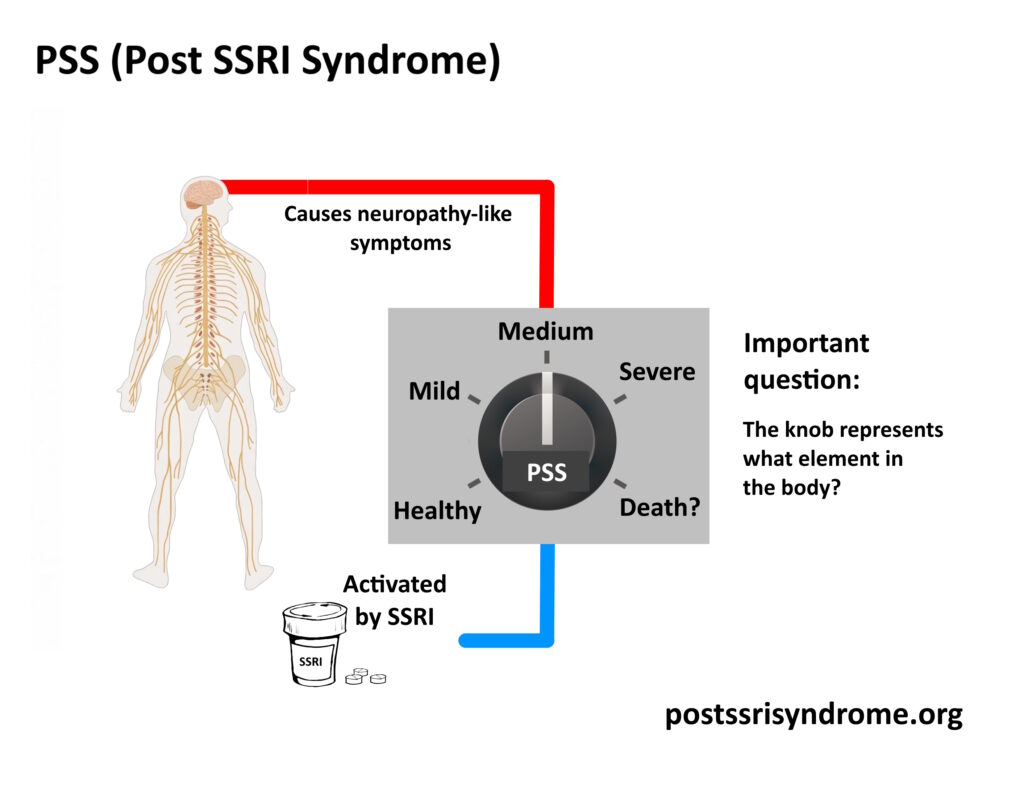
A switch is moved in the body
Important Findings